Cozumel guide
Snorkeling & Diving in Cozumel
Cozumel's reefs explained — Palancar, Santa Rosa Wall, Columbia Deep, what drift diving feels like, and the snorkeling you reach by walking in.
Cozumel is on every list of the world’s best dive destinations, and the reason is not the coral — plenty of places have coral. It is the current.
A steady flow runs south to north along the island’s western wall. It is consistent rather than erratic, which means a dive here is usually a drift dive: you drop in, the boat follows your bubbles, and the reef moves past you while you barely kick. Divers who have fought current elsewhere find Cozumel almost restful. It also means you cover a great deal of reef on a single tank.
The other thing Cozumel has is a protected marine park — Arrecifes de Cozumel National Park covers the southern reefs — and visibility that regularly runs 80 to 100 feet or more.
You do not need a boat to see the reef
This is the part first-timers underestimate. On the south-west coast the reef comes close enough to shore that you can walk in from the beach and be over living coral within minutes.
The best-known shore entries are Dzul-Ha (Money Bar), where you pay for a drink and use the steps, and the shoreline running through the south hotel zone. Fish life is genuinely good — parrotfish, sergeant majors, angelfish, the occasional ray, and enough coral structure to keep you out for an hour.
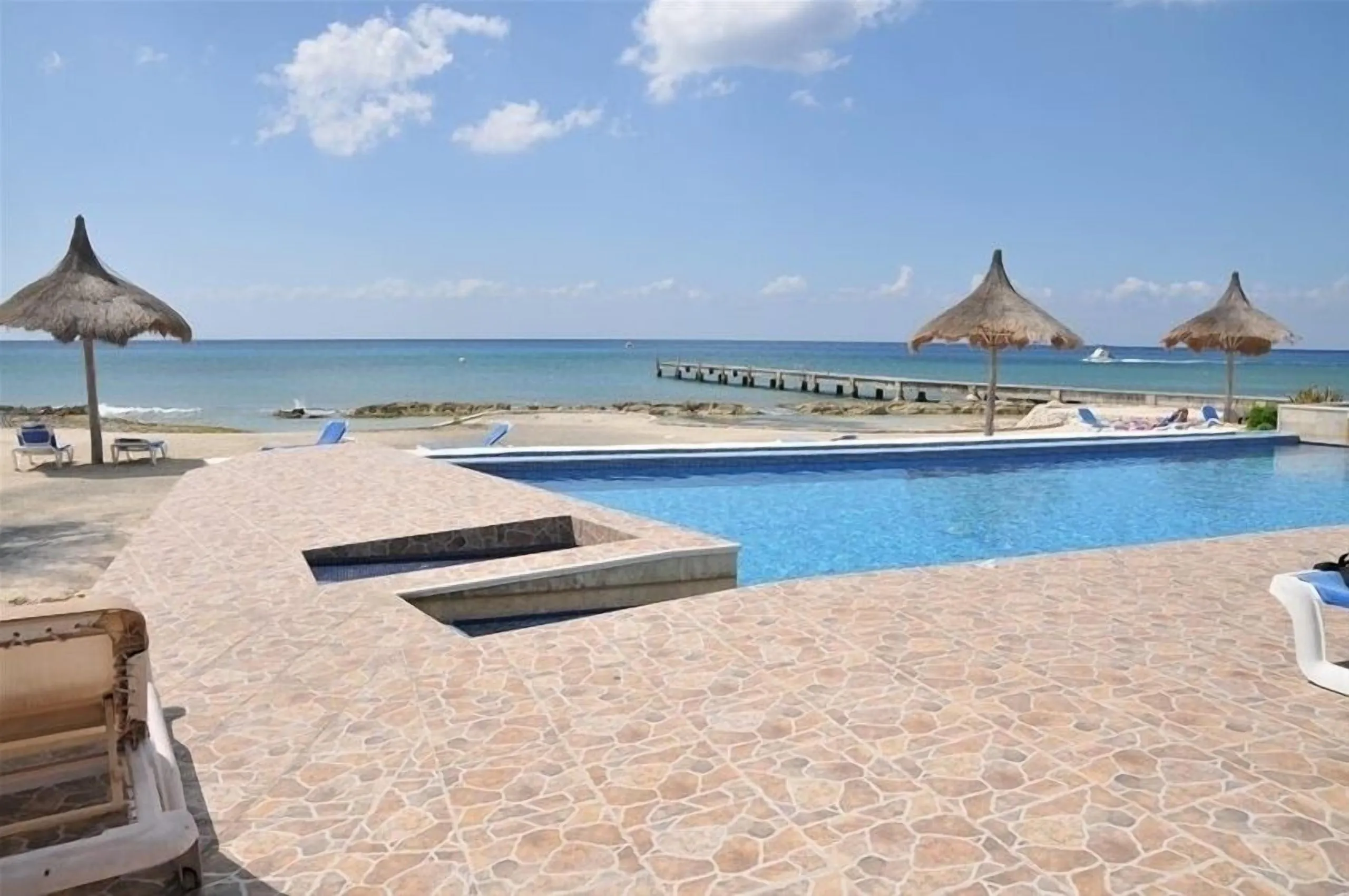
Where you stay matters here. Along the Costa del Sol stretch the national park reef begins about a five-minute walk down the shore, which means a morning snorkel costs you nothing and requires no booking. We keep masks, fins and beach gear at our villa so guests can simply go.
Snorkel in the morning. The wind almost always builds through the day, and with it the chop and the visibility loss.
The dive sites worth knowing
Palancar
Not one site but a stretch of reef with several distinct entries — Palancar Gardens, Palancar Horseshoe, Palancar Caves, Palancar Bricks.
Palancar Gardens is the gentle one: a sloping reef and wall with much of the dive between roughly 40 and 80 feet, mild current when conditions cooperate. It is the site most shops use to introduce newly certified divers to drifting, and it is a lovely dive in its own right — big coral heads, swim-throughs, and sand channels between the buttresses.
Palancar Horseshoe and Caves add more dramatic structure: tunnels, arches and canyons cut through the reef. Slightly more skill required, considerably more fun.
Santa Rosa Wall
The island’s signature wall dive. The reef top sits around 50 feet and then the wall simply goes — past recreational limits and into blue. The good coral and sponge life concentrates in the 40 to 60 foot band, so a well-run dive keeps you shallow and lets the wall drop away beside you rather than below you.
Current can be strong. Most shops treat Santa Rosa as a site for experienced divers, and they are right to.
Columbia Deep
The veterans’ favourite. Depths from around 60 to 130 feet, enormous coral pinnacles, and current that is stronger and less predictable than elsewhere on the island. Advanced certification and real comfort at depth are the entry requirements.
Columbia Shallows, confusingly, is a different proposition entirely — a shallow, calm, bright site that doubles as one of the better snorkel stops on the island.
Paradise Reef
Close to town, shallow (roughly 30 to 50 feet), easy, and the standard site for night dives and check-out dives. Not spectacular, genuinely pleasant, and where a lot of people do their first Cozumel dive.
El Cielo
Technically a snorkel site rather than a dive. A shallow white-sand bar off the southern tip where the water is waist deep, startlingly clear, and populated by hundreds of starfish. Boats reach it in 20 to 30 minutes from the marinas.
Go early. By eleven it is a parking lot of catamarans. And do not lift the starfish out of the water — it kills them, and the operators now police it.
How a dive day works
The standard format is a two-tank morning boat dive: leave around 8 or 9am, do a deeper site first, surface interval, then a shallower one, back by early afternoon. Afternoon single-tank trips and night dives are widely available.
Most shops offer:
- Two-tank morning trips, the workhorse option
- Private or small-group charters at a premium
- Full PADI and SSI course ranges, from Open Water to technical
- Nitrox, usually for a modest supplement
A practical point about geography: most dive boats leave from the marinas near town, but the best reefs are in the south. If you are staying on the south-west coast, look for a shop that picks up from a southern marina or a pier — you will save close to an hour of boat time each day. Some operators will collect from the private piers in the south-shore communities, which is one of the reasons those villas are popular with dive groups.
What you need to bring
Rental gear is universally available and generally decent. Most regular divers bring their own mask, computer and possibly fins, and rent the rest.
- Mask that fits. The single piece of gear worth owning.
- 3mm wetsuit or shorty. Water runs roughly 78–84°F depending on the month; a shorty is plenty for most people, and some divers skin-dive it in summer.
- Reef-safe sunscreen. The marine park bans conventional chemical sunscreens and the shops enforce it. Buy mineral (zinc oxide) before you travel — it is expensive on the island.
- Certification card and logbook. Shops do check.
- Dive insurance. DAN or equivalent. There is a hyperbaric chamber on the island, which is reassuring, but treatment is not free.
Marine park fee
Diving and snorkeling inside the national park carries a small daily marine park fee, usually collected by your dive shop and typically a few dollars a day. It is not optional and it funds the reef protection that keeps the site worth diving. Assume it is extra to your quoted dive price unless the shop says otherwise.
When the diving is best
Conditions are good year-round, but not equal.
February through June is the sweet spot: warmest water, calmest seas, best visibility. December through March brings the occasional norte — a north wind that can shut the port for a day or two, which matters if you have only a short trip. Hurricane season runs June through November, with the genuine statistical risk concentrated in late August through October.
For a dedicated dive week, March through early June is hard to beat. Our month-by-month guide goes through the trade-offs in more detail.
Non-divers in a diving group
This is a common Cozumel situation and it resolves well. Most dive boats will take snorkelers along on the same trip at a lower rate, and Palancar Shallows, Columbia Shallows and El Cielo are all genuinely good from the surface.
The other option, if the group is split, is renting a whole house with a pool and a beach rather than booking hotel rooms — the divers leave at eight and the non-divers do not have to go anywhere. That is, honestly, why a lot of dive groups end up in villas on the south shore.
A reasonable first-timer’s plan
- Day one: shore snorkel to get your bearings and check your mask.
- Day two: two-tank boat dive, Palancar Gardens and Paradise Reef.
- Day three: rest day. No diving before flying, and a day off is good practice anyway.
- Day four: two-tank, Santa Rosa and Columbia Shallows.
- Day five: El Cielo trip for the group, early.
Leave at least 18 to 24 hours between your last dive and your flight. It is the one non-negotiable rule of a dive holiday and the one people most often get wrong on the last morning.
Keep reading
All guidesThings to Do in Cozumel
Reefs, ruins, jungle roads and the quiet east coast — what is actually worth your days on the island, and what to skip.
Read the guide · 11 minBest Beaches in Cozumel
Which beaches are free, which are beach clubs, which are actually swimmable, and what a day pass really costs.
Read the guide · 9 minGetting to Cozumel
Fly direct into CZM or fly to Cancún and take the ferry — the real costs, times and trade-offs of each.
Read the guide · 10 min