Cozumel guide
Is Cozumel Safe?
What the US travel advisory actually says about Cozumel, how the island compares with the mainland, and the risks that genuinely matter here.
Short answer: yes, by the standards most travellers apply. Cozumel is consistently one of the calmer places in the Mexican Caribbean, and the risks that actually put visitors in hospital here are not the ones people worry about before they come.
That said, “safe” deserves detail rather than reassurance. Here is what the situation actually is.
What the travel advisory says
The US State Department issues advisories state by state, not city by city. Cozumel sits in the state of Quintana Roo, along with Cancún, Playa del Carmen and Tulum.
Quintana Roo has been rated Level 2: Exercise Increased Caution. That is worth putting in context — Level 2 is the same rating applied to France, Germany, Italy, Spain and the United Kingdom. Level 1 is “exercise normal precautions”; the serious warnings are Levels 3 and 4, and Quintana Roo is not in them.
Where the advisory does flag concern, it points at specific situations on the mainland: late-night nightclub districts in Cancún and Tulum, and certain neighbourhoods in Playa del Carmen. Cozumel itself is routinely described as comparatively low-crime, and US government personnel are not restricted from travelling here.
Advisories are updated periodically. Check the current text at travel.state.gov before you travel rather than relying on any article, including this one.
Why the island is calmer than the mainland
A few structural reasons, and they are not mysterious.
Cozumel is an island of roughly 100,000 people with a single airport and a ferry terminal. Anyone arriving or leaving passes through a small number of controlled points. The economy is almost entirely tourism and diving, which gives essentially everyone a direct stake in visitors feeling comfortable.
It is also small enough to be socially legible. In San Miguel, people know each other. The anonymity that makes trouble easy in a large resort strip does not really exist here.
None of that makes it crime-free. It does make the character of the place noticeably different from the mainland party corridors.
The risks that actually matter
Having spent a lot of time here, this is the honest ranking of what is most likely to ruin a trip.
1. The east coast surf
This is the real one. The east side of the island faces open Caribbean with strong undertow, no lifeguards, and no one around to help. People drown there, and it is almost always a visitor who mistook an empty beautiful beach for a calm one.
Swim in the sheltered coves — principally Playa Chen Río — and treat the open stretches as scenery. If you can see surf breaking, stay out of it.
2. Scooters and mopeds
The second genuine hazard. Rental scooters, unfamiliar riders, no helmet, wet road, a tope that appears without warning. Scooter accidents keep the island’s clinics busy.
If you rent one: wear the helmet, stay off it in rain, and do not ride after drinking. A small car costs a little more and is dramatically safer.
3. Sun and dehydration
Boring and extremely common. You are at 20 degrees north with reflective water on all sides. Heat exhaustion and serious burns are the most frequent medical complaints among visitors.
4. The water and the ice
Tap water is not drinkable in most of the island’s buildings. Stick to bottled or purified water, and be sensible about ice and salads in very cheap places. Some houses and villas — ours among them — have whole-house purification systems, in which case the tap is fine; ask rather than guess.
5. Petty theft and card skimming
Ordinary tourist-destination stuff. Do not leave bags on the beach while you snorkel, use ATMs inside banks rather than freestanding ones on the tourist strip, and keep an eye on your card.
What is not really a risk here
Cartel violence dominates conversation about Mexico, and it is a genuine problem in specific parts of the country. It is not a plausible thing for a tourist to encounter on Cozumel. The island is not a smuggling corridor or a contested territory, and incidents in the state have overwhelmingly involved people connected to that world, in places and at hours tourists are not.
Kidnapping of tourists is not a Cozumel phenomenon. Neither is violent street crime against visitors in any statistically meaningful way.
Practical advice that actually helps
Money
Pesos are better than dollars almost everywhere — you will get a poor exchange rate paying in USD. Withdraw pesos from a bank ATM. Cards are widely accepted in restaurants and dive shops; markets, small taquerías and Punta Sur park are cash.
Tipping
Tipping is expected and appreciated.
- Restaurants: 10–15%, more for good service. Check whether propina is already included.
- Dive crew: $10–15 USD per day per diver is a normal range, more if they looked after you well.
- Housekeeping: a daily or end-of-stay tip.
- Bag handlers and van drivers: small change.
Taxis
Taxis are regulated and have fixed zone fares, not meters. Agree the fare before you get in — every driver knows the rate, and asking first avoids the only argument you are likely to have. Fares rise at night. There is no Uber on the island.
Driving
One coastal road, well paved, easy. No petrol station on the east coast, so fill up on the west side. Topes are everywhere. Mexican liability insurance is compulsory and your credit card’s collision coverage does not substitute for it. Police do stop tourists; keep your licence and rental papers with you and stay polite.
Health and medical
There are clinics and a hospital in San Miguel and — importantly for divers — a hyperbaric chamber on the island. Treatment is not free; travel insurance with medical cover is worth having, and divers should carry DAN or equivalent.
Bring any prescription medication you need in its original packaging with a copy of the prescription. Pharmacies are good and many things are available over the counter, but do not count on a specific brand.
Sunscreen
The marine park prohibits conventional chemical sunscreens, and dive and snorkel operators enforce it. Bring mineral (zinc oxide) reef-safe sunscreen from home — the selection on the island is limited and the price is not.
Solo and female travellers
Cozumel is generally regarded as a comfortable destination for solo travellers, including women, with the usual sensible precautions — the same ones you would apply in any unfamiliar town after dark. The dive community here is sociable and makes solo travel easy.
Families
It is an easy island with children. Shallow calm west-coast water, short driving distances, a genuinely family-oriented local culture, and Sunday evenings in the main plaza where the whole town brings its kids out. Supervise near water, keep them out of the east-coast surf, and be relentless about sunscreen and hats.
Where you stay makes a difference
One practical note, and we have an interest here so take it as disclosure rather than sales.
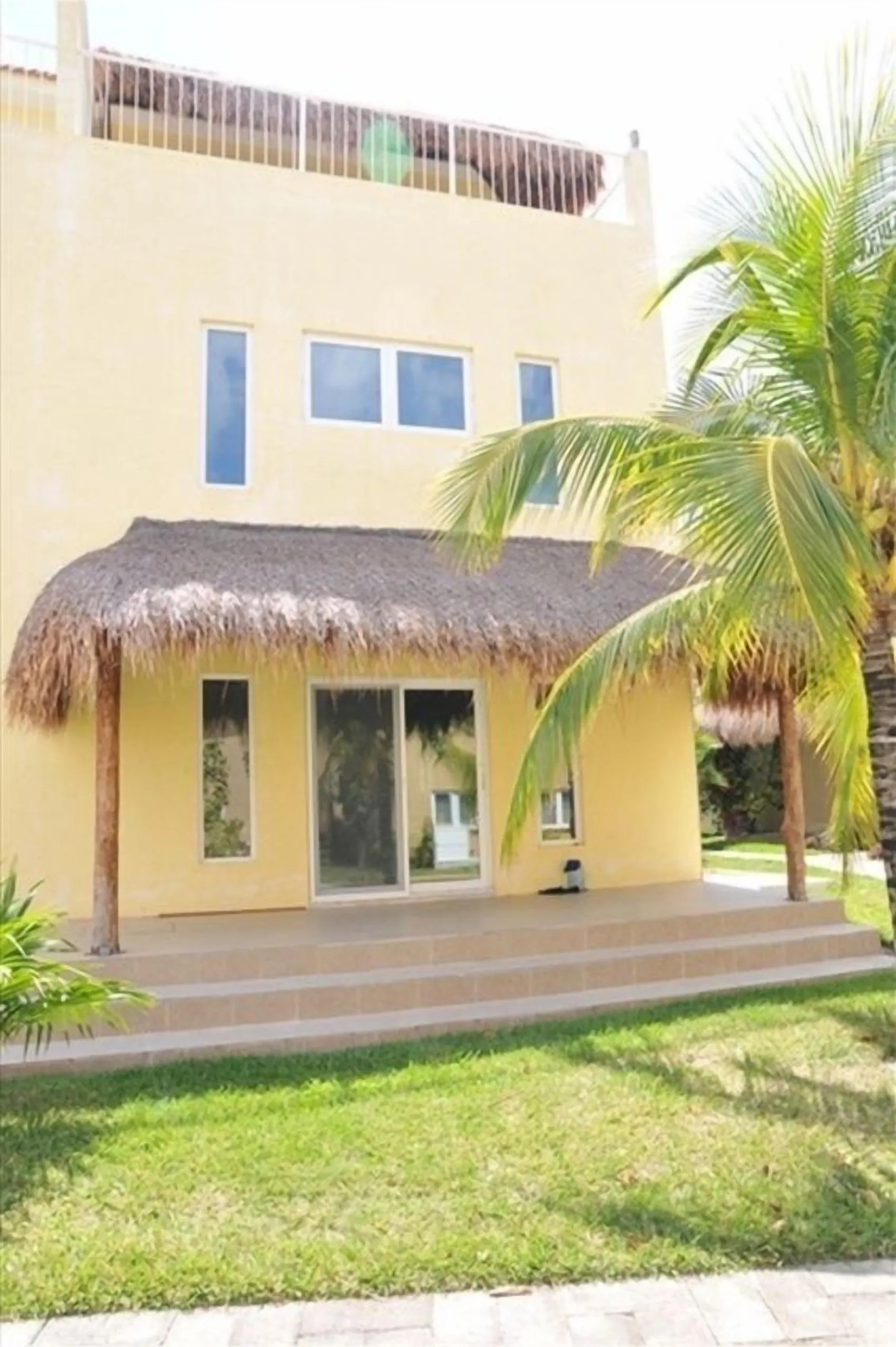
Most short-term accommodation on Cozumel is in the town or the hotel zones. The gated residential communities along the south-west coast work a little differently: a guard at the gate around the clock, a controlled entrance, on-site management, and no through traffic. Our own house sits in one of them on the south-west shore for exactly that reason — it is the arrangement that makes us comfortable leaving the place with a family in it.
If safety is weighing on you, that structure is worth looking for whoever you rent from. It is one of the things worth weighing up when you decide where to stay on the island.
The honest summary
Cozumel is a small, tourism-dependent island with a low-crime reputation, rated at the same advisory level as much of Western Europe. The things most likely to hurt you here are the sea, a scooter and the sun — in that order.
Be careful in the water on the east side, rent four wheels instead of two, drink purified water, and take the sunscreen seriously. Do that and the island is about as relaxing as travel gets.
Ready to plan the trip? Start with what to do on the island or when to come.
Keep reading
All guidesThings to Do in Cozumel
Reefs, ruins, jungle roads and the quiet east coast — what is actually worth your days on the island, and what to skip.
Read the guide · 11 minBest Beaches in Cozumel
Which beaches are free, which are beach clubs, which are actually swimmable, and what a day pass really costs.
Read the guide · 9 minSnorkeling & Diving in Cozumel
Palancar, Santa Rosa Wall, Columbia Deep — plus the reef you can swim to from the beach without a boat.
Read the guide · 12 min